Engineering Intelligent Enterprises
XRDigitech helps enterprises transform operations with AI agents, intelligent automation, ERP modernization, cloud, digital twins, and immersive technologies.
Enterprise solutions, end to end
One partner for the systems that run your business — from core ERP to the immersive technologies of tomorrow.

ERP & Enterprise Systems
SAP, Oracle, PeopleSoft, and JD Edwards implementation, support, and migration that unify finance, HR, and supply chain.
AI & Machine Learning
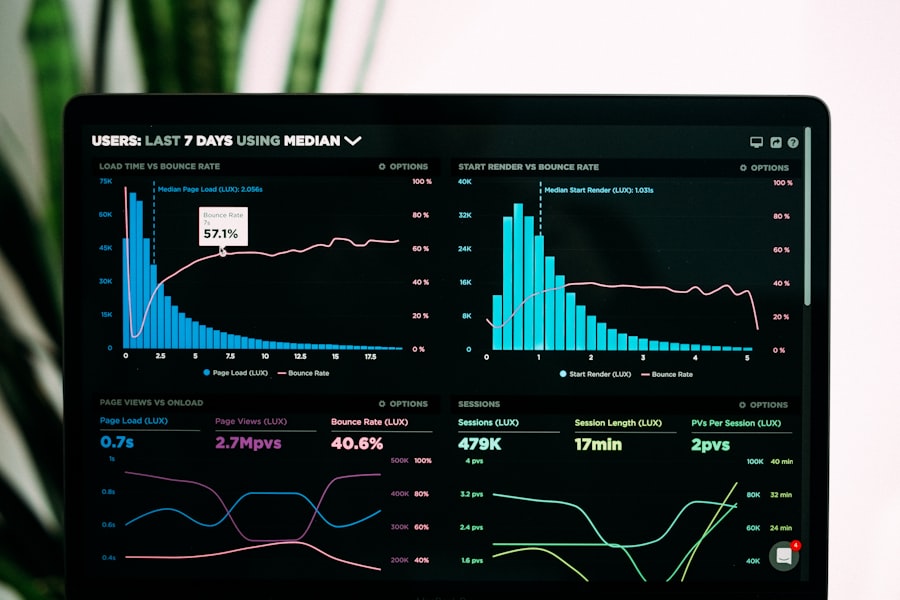
AI/ML consulting, predictive analytics, and intelligent automation that turn data into decisions.
AR / VR / MR & Games
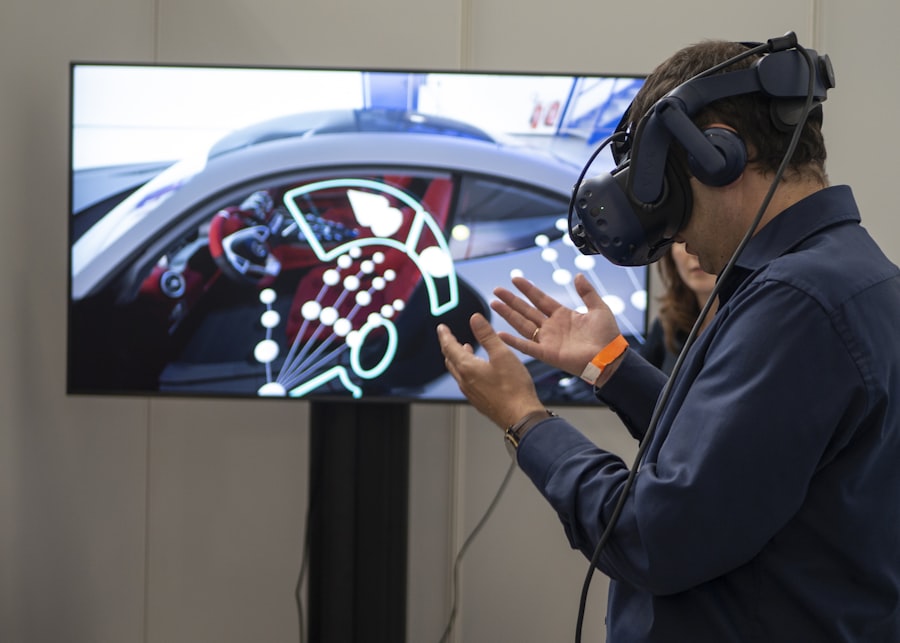
Immersive training, simulations, digital twins, and games for healthcare, industry, and brands.

Cloud & Infrastructure
Cloud migration, managed services, security, virtualization, and data centers built for uptime and compliance.

Software Development
Custom web, mobile, and UI/UX product engineering — from prototype to production, on time.

Hire Dedicated Developers
Scale fast with vetted web, mobile, and full-stack engineers embedded in your team.
From expensive problems to measurable outcomes
Reduce Operational Costs
AI automation + intelligent workflows that cut manual effort.
Modernize Legacy Systems
ERP + cloud + application modernization, without the disruption.
Train Employees Better
VR + MR + simulation for faster, safer skill development.
Predict Operational Failures
Digital twins + IoT + AI for predictive maintenance.
Make Better Decisions
AI analytics + data engineering that turn data into direction.
Build AI-Powered Businesses
GenAI + AI agents + enterprise automation that scale.
AI agents & immersive products that transform business
AI voice agents, medical AI, simulations, and digital twins — built on leading AI and game engines.
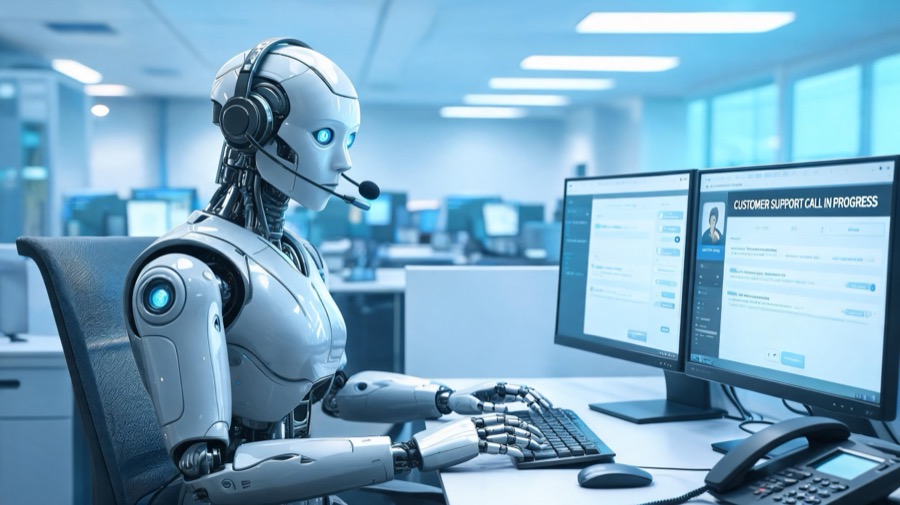
Nivakya — AI Voice Agent
Natural-language AI that answers calls, qualifies leads, and resolves queries 24/7.

Medical Report Analyzer
AI that reads, summarizes, and extracts key findings from clinical documents.
Industrial Digital Twin
Real-time virtual replicas for monitoring and predictive maintenance.
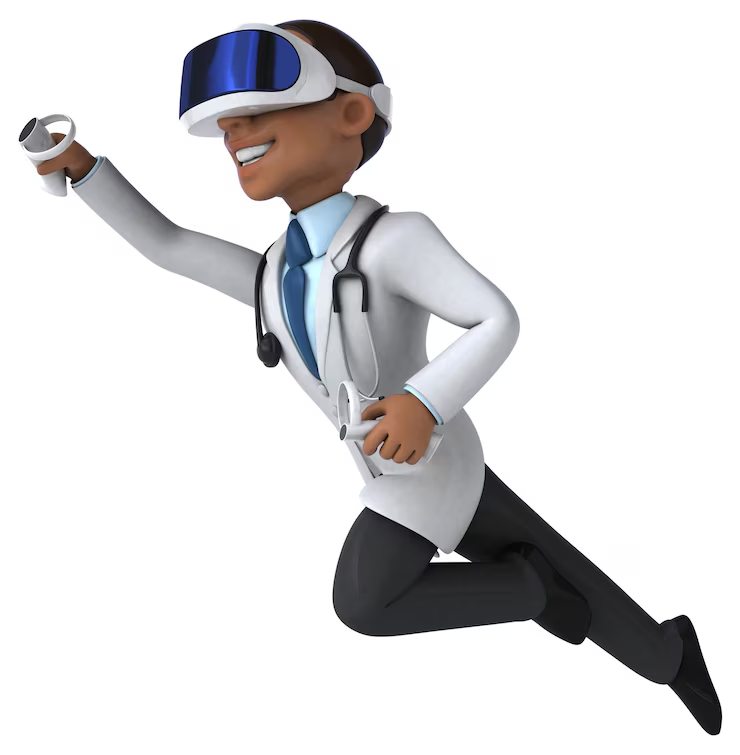
Medical Simulations
Real-world clinical scenarios to practice critical skills safely and effectively.
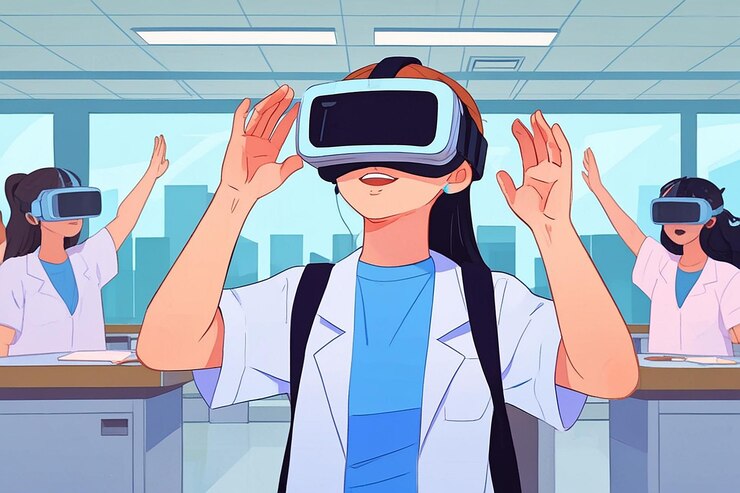
Skill Development Simulations
From clinical competencies to soft skills — immersive, scenario-based learning.

AR Games
Augmented reality games that blend the digital and physical worlds.
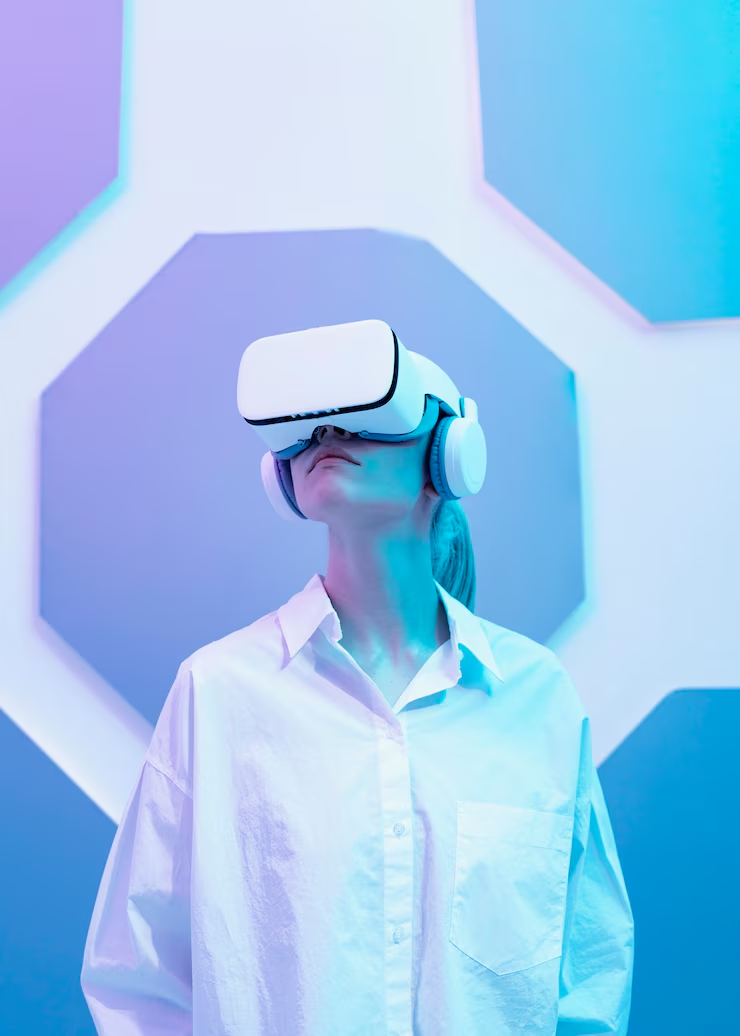
VR Games
Fully immersive virtual reality games that redefine interactive entertainment.
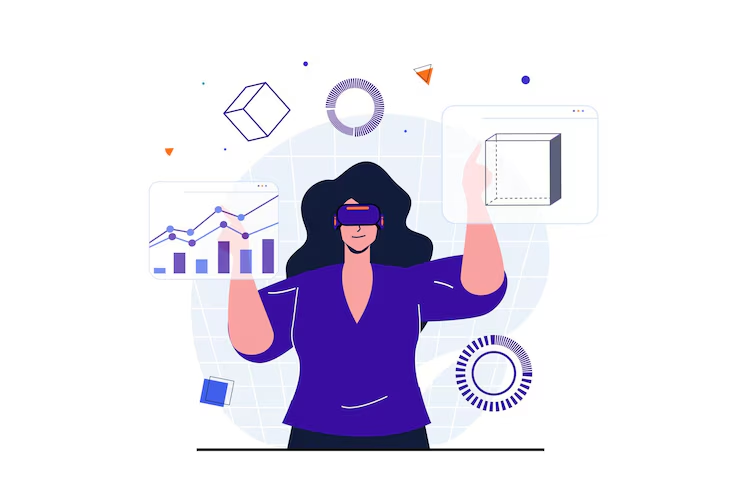
MR Games
Mixed reality games that merge real and virtual environments in real time.
Explore All Products
See how our simulators and games drive real outcomes.
View products →A partner built for enterprise outcomes
We combine deep ERP and infrastructure expertise with emerging-tech capability — so you get one accountable partner across the entire stack.
- ISO 27001, ISO 9000, and CMMi3 certified delivery
- Dedicated senior engineers — not rotating junior teams
- Clear scope, fixed timelines, and measurable ROI
- Global delivery: Dubai · India · UK · USA

Where we deliver
Healthcare
Medical simulations, patient data, compliance.
Manufacturing
ERP, digital twins, predictive maintenance.
Retail & E-commerce
Omnichannel, supply chain, analytics.
Finance & Banking
Security, compliance, core systems.
We Provide Smart Technology That Powers Your Growth
Built on the latest platforms, frameworks, and game engines.


























Innovation Through Technology Partnership
We craft future-ready solutions using AI, automation, and immersive tech — solving today's challenges while unlocking tomorrow's growth.
- Seamless integration with existing systems and workflows
- Scalable architecture that grows with your business
- Future-proof technology choices for long-term value
- Security by design protecting your data and users
- Performance optimization for exceptional user experiences
Design the Concept of Your Business Idea Now
Product Design
Craft beautiful and usable digital products with expert product design services.
Development
Experiment with ideas and technologies — get ahead with R&D solutions.
Data Analytics
Data-transforming capabilities. Outrank the competition with data science.
Testing
Prototype, test, debug, and validate your ideas before launch.
Support
24/7 support and maintenance to keep your products running smoothly after launch.
Success Stories That Inspire
American Express — Financial Training
An immersive training simulation that reduced onboarding time by 35% while improving knowledge retention and employee satisfaction — integrated with existing LMS for seamless tracking and reporting.
ClubCorp — Member Experiences
A custom application that modernized member engagement through personalized digital experiences, including AR elements for virtual facility tours and interactive event previews.
See XRDigitech in action
Our work at GITEX, AI initiatives, and immersive game showcases.
XRDigitech — Working on AI
Bunny Hop — MR Game
GITEX Dubai 2023 Showcase
We are Trusted in 15+ Countries Worldwide





What clients say
"XRDigitech is best software development company in Gurugram! Their team demonstrated unparalleled expertise, delivering high-quality solutions with precision and efficiency. Their commitment to innovation and client satisfaction sets them apart in the competitive tech landscape."

"Our collaboration with the XRDigitech team was instrumental in crafting the initial versions of our Game Design Document, Technical Architecture Document, and concept art for pivotal characters. Throughout the process, the team demonstrated a commendable blend of friendliness, responsiveness, and a commitment to delivering high-quality work."

"Professionals with quality and commitment. Awesome experiences in immersive technology."

From the blog
ERP Data Migration & Cleansing: The Foundation of Successful Implementation
Why clean data is the make-or-break step of any ERP rollout.
Benefits of Cloud-Based ERP Systems for Enterprises
Scalability, cost, and resilience benefits of moving ERP to the cloud.
How Machine Learning Improves Business Decision Making
Turning operational data into confident, faster decisions.
Explore Our Career Opportunities
Looking for rewarding IT jobs in Dubai? Join XRDigitech — multiple openings in AI, AR/VR, Cloud, and ERP.
We foster talent and give our employees room to grow and thrive, pushing the boundaries of emerging technology.
View Open RolesWhy Work With Us?
- Creativity and innovation in a friendly, inclusive environment
- Training programs, workshops, and industry-leading resources
- Flexible hours and remote work for a healthy work-life balance
- Collaboration where every voice is heard and every idea is valued
- Cutting-edge technologies and innovative projects
Ready to transform your enterprise?
Book a free consultation and get a clear roadmap — no obligation.
Book a Consultation